Christy Chan
Nanoscience Microscopy
UCLA
August 3, 2015
Monday
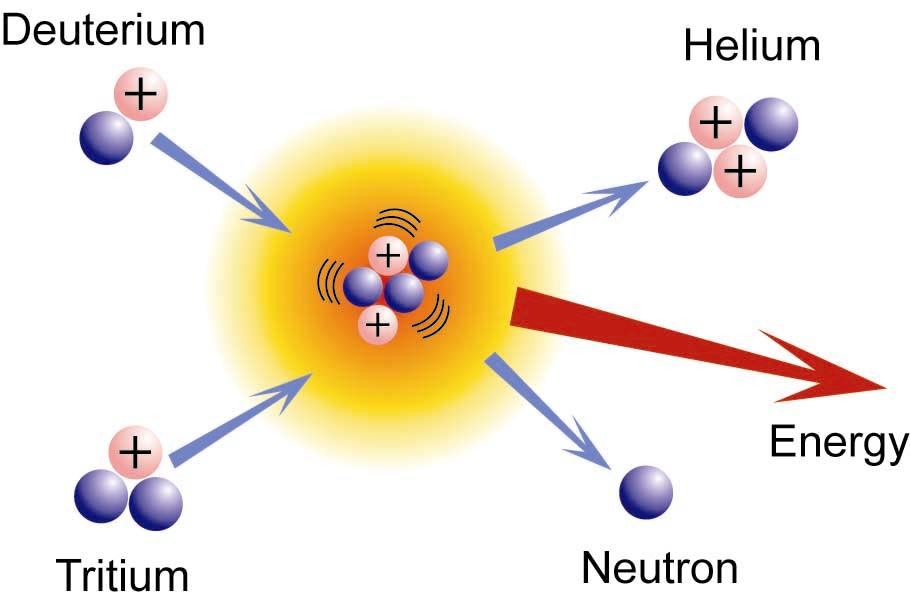
I have always been interested in Chemistry and felt surprised that I understood the concept of it which lead me to take AP Chemistry to further my knowledge. I remembered a specific lesson in class which my teacher taught us the difference between nuclear fusion and fission. He explained the basic technicality of each of them. Nuclear fission is the splitting of large atoms such as U-235 or Pu-239 into smaller atoms with neutrons. Nuclear fusion is the slamming of small atoms/nuclei together to make larger energy and atoms. It fascinated my interest that there are such powerful reactions and creations that can happen with such small particles. One of the best usage of fusion involves creating a reactor combining fusion and fission to burn nuclear waste, which is happening in China currently. A somewhat bad usage/creation of it is nuclear weapons, which is generated by fission or both fission and fusion. A fusion reactor requires H-2 which is easy to obtain, produces a ton of energy, and creates no waste. However, this requires a tone of energy which means a super high temperature that is approximately up to 4x10^7 K. Another example of fusion is that elements are formed from the core of stars. Large stars release heavy elements generated during explosion into outer space in a supernova event. This adds on to the “hot” fusion since stars’ approximate surface temperatures ranges from 3,500K to 7,500K. This then creates the question for me if cold fusion is a possibility.
References:


No comments:
Post a Comment