Christy Chan
Nanoscience Microscopy
UCLA
August 4, 2015
Tuesday
Is cold fusion a possibility?
According to my previous blog post, fusion occurs in very high temperature. Such examples include supernova events. This, then, raises the questions if nuclear fusion can actually occur in room or cold temperature, not in super high temperature.
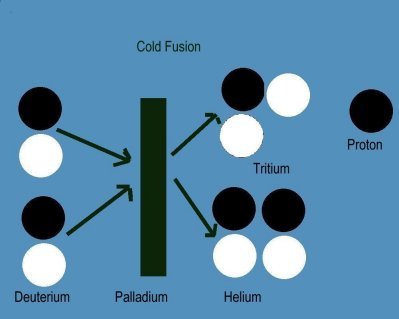
Cold fusion is defined as a nuclear reaction that slams small atoms to make larger atoms, occurring approximately at room temperature. Currently, there are no accepted model that cold fusion really happen. The closest to discovering the possibility of this happen in 1989 when these two scientists, Martin Fleischmann and Stanley Pons, believed that they observed cold fusion when they were performing electrolysis on deuterium water. Deuterium is an isotope of hydrogen since it has one extra number of neutrons. Nevertheless, palladium can absorb deuterium than hydrogen (with zero neutron). However, this idea of cold fusion was overturned as physicists found out the multiple errors and mistakes from Fleischmann’s and Pons’ discovery. Scientists tried to recreate it but the experimental replication was mostly impossible. Unfortunately, this ended the interest and hope in furthering the discovery of cold fusion. There are still scientists involved in trying to discover this process, but they are really few of them and barely any mainstream popularity. This creates the unanswered question of cold fusion which I would love to be able to know the answer. I would also love to know how it would be beneficial and damages to our human population. I also want to know that if it is damaging, then is there a way that we can make it less or not damaging in order to help mankind.
References:
- https://en.wikipedia.org/wiki/Cold_fusion#Criticism
- http://zeenews.india.com/news/sci-tech/cold-fusion-is-real-claim-scientists_1559235.html
- http://undsci.berkeley.edu/article/0_0_0/cold_fusion_science


No comments:
Post a Comment